
How closely the predicted breathing rate follows the measured chest movement.预测的呼吸频率与实测胸部运动的吻合程度。
← Back to projects 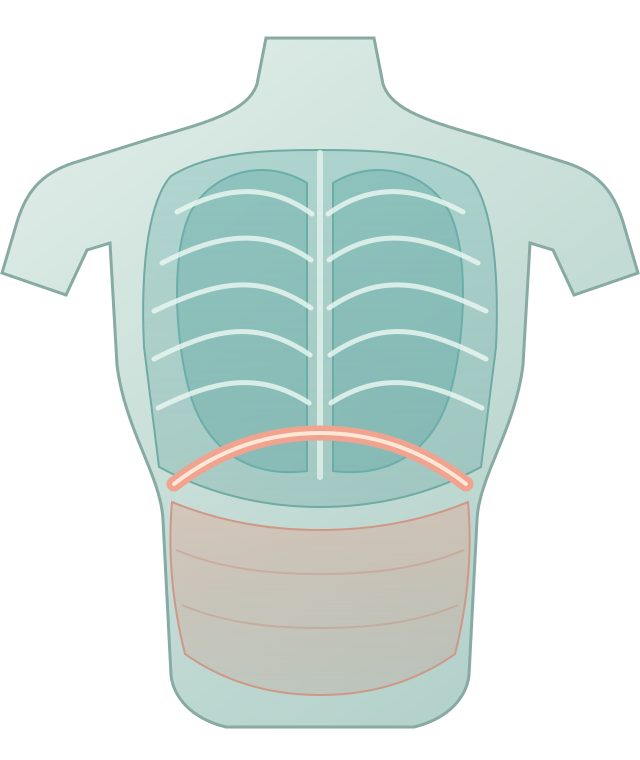
BREATHING RHYTHM呼吸节奏0.83 EXHALE PATTERN呼气变化0.86
Interactive project / Breathing
Hear the phrase. See the breath.
From recorded voice, the model estimates relative chest and abdominal movement. Compare a song, a scale and spoken lyrics through the same anatomical motion model.
VOICE INPUT语音输入VOICE → CHEST / ABDOMENPREDICTED MOTION预测运动
THORACOABDOMINAL MOTION胸腹呼吸运动EXHALE呼气
RIB CAGE胸廓
DIAPHRAGM膈肌
ABDOMINAL WALL腹壁
CHEST EXPANSION胸部扩张
ABDOMINAL EXPANSION腹部扩张
0.0 / 20 srelative motion · anatomical schematic相对运动 · 解剖示意
PREDICTED × MEASURED预测 × 实测
How close is the predicted breath?预测的呼吸有多接近实测?
The colored lines follow the model; the pale lines are real chest and abdominal belt recordings from the same voice clip.彩色线是模型预测,浅色线是同一段声音对应的胸带与腹带实测记录。
MODEL SHOWN当前模型WavLM → Conv-LSTM + U-Net
The model listens to the voice and predicts how the chest and abdomen move over time.模型从人声预测胸部与腹部随时间变化的运动。
Chest belt胸带20 s · 5 Hz
Abdominal belt腹带20 s · 5 Hz
Measured实测Predicted预测
How closely the predicted chest movement follows exhalation through each phrase.预测的胸部运动与乐句中实测呼气变化的吻合程度。
Agreement with measured chest-belt data; 1 means a perfect match.与实测胸带数据的一致性;1 代表完全吻合。
How the motion is drawn
Chest and abdominal contours follow two predicted belt signals. During inspiration, the rib cage expands and the diaphragm descends; abdominal displacement is shown independently. The belts measure relative movement, so the drawing does not express lung volume or physical distance. Respiratory anatomy ↗